

Introduction :
Have you ever wondered what makes your washing machine know when to stop? Or how your car’s airbag opens at the right time?
The secret behind all these smart actions is an embedded system!
Embedded systems are everywhere — in our homes, schools, hospitals, and even in space. They make machines think, decide, and act on their own.
In this post, let’s explore the many applications and let’s see how these systems are used in our daily lives.
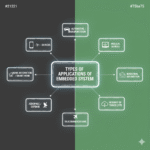
1. Home Appliances
Our homes are full of embedded systems! They make our lives easier, faster, and more comfortable.
Common Examples:
- Washing Machine: Controls washing time, water level, and spin speed automatically.
- Microwave Oven: Sets time and temperature for heating food.
- Refrigerator: Maintains the right cooling temperature.
- Smart TV: Runs apps, streams videos, and connects to Wi-Fi.
- Air Conditioner: Adjusts cooling based on room temperature.
Each of these devices uses sensors and a microcontroller to sense, decide, and act — just like a mini computer!
2. Automotive Systems
Cars today are not just vehicles — they are computers on wheels! 🚘
Embedded systems make driving safe, smooth, and smart.
Examples:
- Airbag System: Detects collisions and inflates airbags instantly.
- ABS (Anti-lock Braking System): Prevents wheels from locking during sudden brakes.
- Engine Control Unit (ECU): Controls fuel, ignition, and air for smooth performance.
- Parking Sensors and Cameras: Help drivers park safely.
- GPS Navigation System: Guides the driver to the destination.
Modern cars can have more than 70 embedded systems working together — making them smart and efficient.
3. Industrial Automation
In factories and industries, embedded systems play a huge role in automation and control.
They help machines work with accuracy, safety, and speed.
Examples:
- Robotic Arms: Used in assembling cars, electronics, or packaging.
- Conveyor Belt Controllers: Move items from one place to another automatically.
- Temperature and Pressure Controllers: Maintain stable conditions in chemical plants.
- Smart Sensors: Detect faults or changes in machines.
With embedded systems, industries can reduce human effort and increase production — that’s why we call it smart manufacturing.
4. Medical Devices
Embedded systems save lives every day!
They are used in hospitals and clinics to monitor, diagnose, and treat patients.
Examples:
- ECG Machines: Monitor heartbeats and display signals.
- Blood Pressure Monitors: Measure blood flow automatically.
- Insulin Pumps: Deliver the right amount of insulin to diabetic patients.
- MRI and CT Scanners: Capture and process images of the human body.
- Portable Health Devices: Like fitness trackers and digital thermometers.
These systems are designed to be accurate, safe, and reliable, because even a tiny error can affect a patient’s health.
5. Consumer Electronics
From smartphones to smartwatches — embedded systems make our gadgets smart and connected.
Examples:
- Mobile Phones: Control display, camera, sound, and battery.
- Smartwatches: Track fitness, steps, and sleep.
- Digital Cameras: Adjust focus, lighting, and shutter speed.
- Gaming Consoles: Manage graphics, sound, and gameplay.
- Bluetooth Speakers: Process sound signals and wireless communication.
These systems combine real-time processing with user-friendly interfaces for smooth performance.
6. Aerospace and Defense
In airplanes, satellites, and defense systems, embedded systems are used for precision and safety.
Examples:
- Flight Control Systems: Manage altitude, speed, and direction.
- Autopilot Systems: Help pilots fly automatically under supervision.
- Radar and Navigation Systems: Track objects and routes.
- Missile Guidance Systems: Calculate direction and target distance.
- Satellite Communication Systems: Transmit data from space to Earth.
These systems must work perfectly under extreme conditions — accuracy here is life-critical.
7. Communication Systems
Every phone call, internet connection, and message you send passes through embedded systems.
Examples:
- Routers and Modems: Transfer data between networks.
- Mobile Towers: Control signal transmission and reception.
- Set-Top Boxes: Convert signals for your television.
- Network Switches: Direct data to the right device.
Without embedded systems, our connected world wouldn’t exist.
8. Office and Education Devices
Embedded systems also support learning and productivity in schools and offices.
Examples:
- Printers and Scanners: Manage printing and document scanning.
- Smart Boards: Display lessons and connect with digital devices.
- Projectors: Process visuals for classrooms and meetings.
- Biometric Attendance Systems: Record employee or student presence.
These devices make learning more interactive and office work more efficient.
9. Transportation and Traffic Control
Embedded systems help manage public transport and traffic flow safely.
Examples:
- Automatic Ticket Machines: Used in buses and metros.
- Traffic Signal Controllers: Manage lights and traffic timing.
- Railway Control Systems: Ensure safe train movement.
- Smart Toll Systems: Detect vehicles and collect tolls automatically.
These systems help reduce congestion and make travel faster and smoother.
10. Internet of Things (IoT) and Smart Homes
Today, embedded systems are becoming part of IoT (Internet of Things) — connecting devices through the internet.
Examples:
- Smart Lights: Turn on automatically when it’s dark.
- Voice Assistants (Alexa, Google Home): Respond to voice commands.
- Smart Security Cameras: Stream live video to your phone.
- Smart Thermostats: Control temperature based on weather and time.
These systems talk to each other — making your home intelligent and energy-saving.
Quick Summary Table
| Area | Example Devices | Purpose |
|---|---|---|
| Home | Washing Machine, AC | Comfort and Automation |
| Automotive | Airbag, ABS | Safety and Control |
| Industrial | Robots, Sensors | Production Efficiency |
| Medical | ECG, MRI | Health Monitoring |
| Electronics | Phones, TVs | Communication and Entertainment |
| Aerospace | Satellites, Flight Systems | Navigation and Precision |
| Communication | Routers, Modems | Data Transfer |
| Education | Projectors, Smart Boards | Learning Support |
| Transport | Traffic Lights, Toll Systems | Traffic Management |
| IoT | Smart Homes, Cameras | Remote Control & Connectivity |
Future of Embedded System Applications
The world of embedded systems is growing faster every year.
In the future, we’ll see:
- AI-powered embedded systems that can learn and make smart choices.
- 5G-based systems for faster communication.
- Smart healthcare wearables that monitor health in real-time.
- Green systems that save energy and protect the environment.
Soon, embedded systems will connect everything — people, machines, and cities — creating a smarter world
Conclusion
Embedded systems are the invisible heroes of our modern life.
They are in our homes, cars, hospitals, schools, and everywhere we go — quietly working to make life easier and smarter.
From washing clothes to flying airplanes, embedded systems are changing how the world works, one device at a time.
-Vintech Embedded Blog Post